
Tuesday, March 24, 2015
Semestered Class Interim
Please see the photo and assess yourself as G/S/N for each category and then answer the questions with a short paragraph. Your current and future blog posts will serve as evidence for more in depth reflection at report card time. :)

Tuesday, December 16, 2014
Sulli Baller Code
Thoughts for our Sulli Ballers:
1) Play Present: As motivated athletes we must "learn from the past" through reflection, game tape, and coaches talks. We must "plan for the future" through goal setting, workouts, practice and game plans. But perhaps more importantly than either of those, we must learn to PLAY PRESENT. Playing present means we leave our homework, relationship issues, jobs, teachers, and friends in their places for 60 min and engulf ourselves in the demands and joys of the game we are in. We get to practice and games early, lace up our shoes, and forget about everything else. It also means we let the mistakes and missed shots leave our minds (to be recalled and discussed later) and focus in on the play at hand. To maximize our potential and our enjoyment, we must have a singular, focused, and positive mind set of doing whatever is physically, mentally and emotionally possible to achieve the result we desire. When the game is done, the other parts of our lives will still be there, waiting. We can and should pick them back up, giving them the same focus we gave our game. We balance our lives, academics, relations by giving everything and everyone our best "present" selves, not by shuffling along through each aspect distracted by the others. So when we are in class, at home with family, or with our friends we give them our all… when we are on the court… we choose to excel in the moment by playing present.

2) Listen and Learn: The hallmark of nearly every "great" player, from any sport, is that they were always improving. No one "perfects" sports, so having a growth mindset is critical. We must not see ourselves as born "good" or "bad" at hoops, but rather as team members all at different places on the road to excellence. Our successful improvement is under our control, and we only become better versions of ourselves through the understanding of our strengths and weaknesses and a great deal of FOCUSED hard work and practice. Putting up poor form shots in the gym every lunch only makes us slightly better at shooting with poor form. Pro athletes pay personal and team coaches millions of dollars to help them find those parts of their game they need to focus on, so as new athletes we need to leave the egos at the door. Our school's coaches not only know way more than our athletes, they have a unique perspective from the sidelines, and are unpaid volunteers whose only desire is to see us succeed. Every minute of every practice and every game… we listen to our coaches critique with a smile and the understanding we are all trying to get better.

3) Team Before Self: Basketball is a team sport. Ergo, your personal success is completely dependent on the success of others and vice versa. You cannot be a success at hoops if you score a bunch of points while your team is losing. A team cannot be a success if its individual members are working independently on their personal goals. TEAMS require that each member adopts a role with responsibilities and works at their best do complete their part. The BEST TEAMS find a way to have each individual member's role maximize their best attributes in pursuit of team goals. These roles are NOT equal, they DO NOT all get the same recognition from fans and parents, they DO NOT even all feel the same to the players. Some players need to score, others rebound, others play defence, and still others to mostly cheer. Roles change throughout a game and even more so through a season depending on the flow of competition, needs of the team and player improvement. Whatever your role is… own it. Do your very best to make the team success your primary goal, no matter which role you find yourself in.

4) Love to Compete: There are many, many definitions of success in the world. John Wooden is the winningest coach in NCAA Basketball history and as a poet/philosopher he has one of the better ones. "Success is peace of mind, which is a direct result of self satisfaction, in knowing you did your best to become the best you are capable of becoming." Athletes who focus on the result of winning become desperate during games, a trait that leads to mistakes, choking, and suffocating self doubt after losses. Those that focus on the process required to win, and the love of competition, find themselves less affected by the big moments or the fear of failure. They understand there is always a loser, and that we miss 100% of the shots we don't take. They are proud and confident in the hard work they have put in as preparation and are excited to test themselves against the best they can find. They focus on having done their very best for their team, win or lose, and they know they can work even harder to improve before the next test. So when we play, we play to win, we give 100% on every play, but we know that our "success" in NOT tied to the win… it is all about our own effort and our love of the chance to compete.

5) Respect the Game: Its' just a game… it is hugely important to us in the moment, and we have given our all to try to win the game… but it is still a game. We don't put our desire to win a game above our respect for those that have given us the chance to compete. This includes the referees, the coaches, our team mates, and yes, even the opposing players. Thousands of people from school and athletic associations have come before us to make our "game" possible and we disrespect all of them when we talk back to officials, mock our opponents, and when we simply don't give our best. Being on a Sullivan Basketball team is huge privilege and should be treated as such. We are mindful of how lucky we are that others volunteer their time, so whether we scored 50 or 0 points, whether the opponent is much better or much worse than us, whether we got all of the calls or none of them, we are humble and respectful of the game.

6) Enjoy the Moment: Far too soon our season will be over and our team will disband, each player going to their own "place" in our school culture. The win/loss record will fade from memory, the trophies will gather dust and be put in boxes, the team shirts will get dirty and be thrown out. What will remain is the feeling we had when we were together. Some let the fleeting nature of these times create anxiety, a desire for everything to perfect, and in doing so usually fall short of their own expectations or even cause the failures themselves. We choose to take the game winning shot and let the cards fall where they may… and to enjoy the moment. Whatever happens we know we put the work in, that failure is temporary, and that we will never have another chance to appreciate being with each other, right here… right now. Don't forget to smile.

1) Play Present: As motivated athletes we must "learn from the past" through reflection, game tape, and coaches talks. We must "plan for the future" through goal setting, workouts, practice and game plans. But perhaps more importantly than either of those, we must learn to PLAY PRESENT. Playing present means we leave our homework, relationship issues, jobs, teachers, and friends in their places for 60 min and engulf ourselves in the demands and joys of the game we are in. We get to practice and games early, lace up our shoes, and forget about everything else. It also means we let the mistakes and missed shots leave our minds (to be recalled and discussed later) and focus in on the play at hand. To maximize our potential and our enjoyment, we must have a singular, focused, and positive mind set of doing whatever is physically, mentally and emotionally possible to achieve the result we desire. When the game is done, the other parts of our lives will still be there, waiting. We can and should pick them back up, giving them the same focus we gave our game. We balance our lives, academics, relations by giving everything and everyone our best "present" selves, not by shuffling along through each aspect distracted by the others. So when we are in class, at home with family, or with our friends we give them our all… when we are on the court… we choose to excel in the moment by playing present.
2) Listen and Learn: The hallmark of nearly every "great" player, from any sport, is that they were always improving. No one "perfects" sports, so having a growth mindset is critical. We must not see ourselves as born "good" or "bad" at hoops, but rather as team members all at different places on the road to excellence. Our successful improvement is under our control, and we only become better versions of ourselves through the understanding of our strengths and weaknesses and a great deal of FOCUSED hard work and practice. Putting up poor form shots in the gym every lunch only makes us slightly better at shooting with poor form. Pro athletes pay personal and team coaches millions of dollars to help them find those parts of their game they need to focus on, so as new athletes we need to leave the egos at the door. Our school's coaches not only know way more than our athletes, they have a unique perspective from the sidelines, and are unpaid volunteers whose only desire is to see us succeed. Every minute of every practice and every game… we listen to our coaches critique with a smile and the understanding we are all trying to get better.
3) Team Before Self: Basketball is a team sport. Ergo, your personal success is completely dependent on the success of others and vice versa. You cannot be a success at hoops if you score a bunch of points while your team is losing. A team cannot be a success if its individual members are working independently on their personal goals. TEAMS require that each member adopts a role with responsibilities and works at their best do complete their part. The BEST TEAMS find a way to have each individual member's role maximize their best attributes in pursuit of team goals. These roles are NOT equal, they DO NOT all get the same recognition from fans and parents, they DO NOT even all feel the same to the players. Some players need to score, others rebound, others play defence, and still others to mostly cheer. Roles change throughout a game and even more so through a season depending on the flow of competition, needs of the team and player improvement. Whatever your role is… own it. Do your very best to make the team success your primary goal, no matter which role you find yourself in.
4) Love to Compete: There are many, many definitions of success in the world. John Wooden is the winningest coach in NCAA Basketball history and as a poet/philosopher he has one of the better ones. "Success is peace of mind, which is a direct result of self satisfaction, in knowing you did your best to become the best you are capable of becoming." Athletes who focus on the result of winning become desperate during games, a trait that leads to mistakes, choking, and suffocating self doubt after losses. Those that focus on the process required to win, and the love of competition, find themselves less affected by the big moments or the fear of failure. They understand there is always a loser, and that we miss 100% of the shots we don't take. They are proud and confident in the hard work they have put in as preparation and are excited to test themselves against the best they can find. They focus on having done their very best for their team, win or lose, and they know they can work even harder to improve before the next test. So when we play, we play to win, we give 100% on every play, but we know that our "success" in NOT tied to the win… it is all about our own effort and our love of the chance to compete.
5) Respect the Game: Its' just a game… it is hugely important to us in the moment, and we have given our all to try to win the game… but it is still a game. We don't put our desire to win a game above our respect for those that have given us the chance to compete. This includes the referees, the coaches, our team mates, and yes, even the opposing players. Thousands of people from school and athletic associations have come before us to make our "game" possible and we disrespect all of them when we talk back to officials, mock our opponents, and when we simply don't give our best. Being on a Sullivan Basketball team is huge privilege and should be treated as such. We are mindful of how lucky we are that others volunteer their time, so whether we scored 50 or 0 points, whether the opponent is much better or much worse than us, whether we got all of the calls or none of them, we are humble and respectful of the game.
6) Enjoy the Moment: Far too soon our season will be over and our team will disband, each player going to their own "place" in our school culture. The win/loss record will fade from memory, the trophies will gather dust and be put in boxes, the team shirts will get dirty and be thrown out. What will remain is the feeling we had when we were together. Some let the fleeting nature of these times create anxiety, a desire for everything to perfect, and in doing so usually fall short of their own expectations or even cause the failures themselves. We choose to take the game winning shot and let the cards fall where they may… and to enjoy the moment. Whatever happens we know we put the work in, that failure is temporary, and that we will never have another chance to appreciate being with each other, right here… right now. Don't forget to smile.
Monday, June 2, 2014
Final Portfolio Assessment "Report Card" Post - Active Learning 2015
There are Four pillars to provide evidence (screen shots + links) for, each worth 25%.
For report card posts in grades 8/9 we are legally required to provide a letter grade.
In 10-12 we need an actual percentage to go along with the more meaningful formative writing, so after discussing your semester you will need to put a NUMBER evaluation on it.
In 10-12 we need an actual percentage to go along with the more meaningful formative writing, so after discussing your semester you will need to put a NUMBER evaluation on it.
As a way to help you organize your thoughts, the following breakdown for the "four pillars" and thematic questions can be used, but you may move beyond these in your explanation.
1) Participation- this category includes all of the factors around your ability to participate and the quality of your participation of in-class activities. Some things to consider would include: attendance and punctuality, wearing gym strip (actual change of clothing from what you wear the rest of the day), physical presence/activity level during games, intensity of participation, "skill level" in various games, and the motivation behind your selection of activities on choice days. Missing “sometimes” or having “no strip” more than once or twice may result in a failing mark here. Use ALL of the above categories in your evaluation. If you try hard "sometimes", and forgot your strip a "couple of times", and needed encouragement from your teacher to work harder "once or twice" you are not an A student… in fact you are not even a B student in this category. Think carefully about each category.
2) Social Responsibility and Contribution to the Class- this category includes all of the factors that led to your improving skills around working with peers to make everyone's experience more successful. Some things to consider would include: examples of leadership (organizing others, encouraging peers), examples of initiative (helping with equipment, helping with other classes WITHOUT being asked to), positive energy and social dynamic during activities, honesty during competition and on fitness scores, and connections with the community/volunteering. Needing reminders from a teacher to do the above items negates their impact. If you need to talked to, you didn’t do well.
3) Healthy Living - this category includes all aspects of your past, current, and future data and goals on your health and fitness. Some of the things to consider would include: your actual fitness scores compared to others and what they teach you, noteworthy changes in your fitness, some of the barriers/limitations you face in participating, dietary choices and extra curricular activity choices and their impact on overall health, injury prevention, management, and rehabilitation, and future plans/goals for overall health choices. This is the connecting piece between class and life… if you have no evidence of choices/activities outside of class you should be failing this section. One major focus should be evidence of choices that specifically relate to the body goal you set. If you have never worked at your goal outside of class you should not be passing this section.
4) Digital Portfolio and Reflective skills: this category includes all aspects of your blog posts. Some of the things to consider would include: the total collection of digital evidence and number of posts, the quality of the selection of evidence as a demonstration of learning, the quality of the summaries/explanation of the evidence (with reflection of effort, new learning cited, research included, and future goals/plans set), the usefulness of comments on peers blog entries as a part of socially constructed learning and assessment, and your ability to synthesize your entries into a summative final post which provides evidence for your learning. Neufeld’s classes should have: videos of weight room workouts from YouTube or the Internet, videos or other evidence of themselves in the weight room doing those same workouts, images and video of fitness and games, reflections about diet with evidence of meals, evidence of exercise outside of school, a reflective post about the quality of your blog as compared to others, multiple posts about your fitness scores on testing days (beep, vertical), a mid term post, a final post, at least one post with evidence of social responsibility choices you make in class, plus others.
We have worked very hard to create opportunities for you to learn about being intrinsically motivated, to learn about and find value in personalizing your experience to best suite your own physical needs, and we have devalued the external motivators like grades as a reason for being your best. However, along with our legal obligations, we would like to have you understand the spirit of what grades are supposed to reflect, and rather than having your "stories" be excuses for unfair teacher assessed grades, have them be your evidence for co-constructed grading. To do this you need to be honest about the four pillars of learning and how well you approached each of them.
While they are not set at 25% each, if you have minimal evidence for one or more of the pillars this should signal to you that you were NOT successful in that area, which would then be reflected in you self assessed final grade.
Neufeld classes should have at minimum (3-5 fitness testing days stats and reflections, 2 personal goal setting posts with research links to appropriate workouts, 3 or more goal of the day workouts, 5 fitness day activity reviews and reflections, 3 or more sport day activities and leadership/participation review, a midterm post, a diet post, an extra curricular activity post, and this FINAL post)
Your final post should have evidence The goal here is for you to be able to critically and honestly see yourself within the context of the pillars and the class. Nobody is perfect and nobody is without hope... finding yourself in the middle will be more rewarding than anything I as a teacher can ever say about you. Good luck!!
Monday, January 13, 2014
Final Portfolio Assessment "Report Card" Post
As we have moved further and further away from teacher centred, sport/skill based marking in our Active Learning program we have asked you as students to learn to collect and reflect on the evidence of your own experience, effort and learning. This final post should pull from the best of your evidence, highlight your growth and learning, and set out a plan for the future. For report card posts in grades 8/9 we are legally required to provide a letter grade, and in 10-12 we need an actual percentage to go along with the more meaningful formative writing, so after discussing your semester you will need to put a summative evaluation on it.
As a way to help you organize your thoughts, the following breakdown for the "four pillars" and thematic questions can be used, but you may move beyond these in your explanation.
1) Participation- this category includes all of the factors around your ability to participate and the quality of your participation of in-class activities. Some things to consider would include: attendance and punctuality, wearing gym strip (actual change of clothing from what you wear the rest of the day), physical presence/activity level during games, intensity of participation, skill level in various games, and the motivation behind your selection of activities on choice days.
2) Social Responsibility and Contribution to the Class- this category includes all of the factors that led to your improving skills around working with peers to make everyone's experience more successful. Some things to consider would include: examples of leadership (organizing others, encouraging peers), examples of initiative (helping with equipment, helping with other classes WITHOUT being asked to), positive energy and social dynamic during activities, honesty during competition and on fitness scores, and connections with the community/volunteering.
3) Healthy Living - this category includes all aspects of your past, current, and future data and goals on your health and fitness. Some of the things to consider would include: your actual fitness scores and what they teach you, note worthy changes in your fitness, some of the barriers/limitations you face in participating, dietary choices and extra curricular activity choices and their impact on overall health, injury prevention, management, and rehabilitation, and future plans/goals for overall health choices.
4) Digital Portfolio and Reflective skills: this category includes all aspects of your blog posts. Some of the things to consider would include: the total collection of digital evidence and number of posts, the quality of the selection of evidence as a demonstration of learning, the quality of the summaries/explanation of the evidence (with reflection of effort, new learning cited, research included, and future goals/plans set), the usefulness of comments on peers blog entries as a part of socially constructed learning and assessment, and your ability to synthesize your entries into a summative final post which provides evidence for your learning.
We have worked very hard to create opportunities for you to learn about being intrinsically motivated, to learn about and find value in personalizing your experience to best suite your own physical needs, and we have devalued the external motivators like grades as a reason for being your best. However, along with our legal obligations, we would like to have you understand the spirit of what grades are supposed to reflect, and rather than having your "stories" be excuses for unfair teacher assessed grades, have them be your evidence for co-constructed grading. To do this you need to be honest about the four pillars of learning and how well you approached each of them. While they are not set at 25% each, if you have minimal evidence for one or more of the pillars this should signal to you that you were NOT successful in that area, which would then be reflected in you self assessed final grade. The goal here is for you to be able to critically and honestly see yourself within the context of the pillars and the class. Nobody is perfect and nobody is without hope... finding yourself in the middle will be more rewarding than anything I as a teacher can ever say about you. Good luck!!
Tuesday, November 5, 2013
Mid Term Reflection
Active Learning - Reflection
During PE this year, how have you shown you are prepared and willing to participate
in a variety of activities? On what days have you participated to your best effort and
why? What days have been a struggle for you and why?
How do you contribute to the overall success of the class? What kind of attitude do
you bring and why? How do you interact with other students in our class?
Describe your participation during fitness days - have you been able to push yourself
physically? What types of fitness activities do you enjoy the most? What fitness
goals do you have for the rest of the year?
What does "leadership" mean to you? Who are the best leaders in our class - why?
What improvements would you like to make in PE by the end of the year? What are
you the most proud of so far?
Finally, what letter grade A, B, C+, C, C- (gulp) best represents the effort you just described? In Grade 10-12 we need an actual percentage as well. :( Like 71%… because…"
Monday, June 3, 2013
Final Post Prompts
For those who are struggling with what to write for their final post: read my example post, read your peers posts (by viewing my full profile and checking the reading list), or check teachervaughan.blogspot.ca for prompt questions and another example.
Be sure you are writing a new "post" by clicking the white/orange pencil. DO NOT write "new blog" as your teacher can't read that... It is an entirely new blog. If you already have two or more blogs... Copy and paste your posts into the first one you made (it should have your teacher as a "follower").
Remember, the further you move from writing this for your teacher the better you will do. Write it as a public document that captures your learning, effort, and growth for the year. An honest personal reflection that a complete stranger would be able to understand. :) due Friday... Good luck!!!
Thursday, May 30, 2013
The Reluctant Runner
I have been encouraging, reminding, and cajoling Sulli students to digitally record their efforts and growth in Active Learning for the last few months. As your final portfolio post approaches you have been directed to begin the process of providing evidence for each of the categories from your earlier self assessments. This can be a daunting task, so I am hoping my exemplar will provide you some concrete ideas for your own posts. You should be highlighting your strengths and areas of improvement, but also honestly recording your not so great habits as a part of your personal assessment of your year. The more you share your thought process and move away from just copying my examples the better. You can also click "full profile" under my picture on the side and read all of your peers examples for inspiration.
I named my post "the reluctant runner" because this year has been one of dramatic change for me. I grew up playing sports, lots of sports, everything I could register for. After years of badminton, volleyball, basketball, soccer, hockey, and rugby I settled into a rugby career that was demanding, exciting, and a tonne of fun. I always did loads of fitness and trained hard to make myself a better player, but I hated the distance running sessions with a passion. When the ability to play was removed by a neck injury a few years ago, I also lost my spark for training and quit distance training almost all together.
Being a part of the Sulli crew though, I continued to participate in school fitness, getting my calorie burn going in many different ways. I enjoyed the AB partner, trifecta (crossfit) and Insanity days much more than track or community running, but the last year has forced me to rethink my disdain for the pounding the pavement.
As a father of two small children, my time is precious and filled with pick ups, drop offs, swimming, ballet, and a busy bedtime routine. Gone are the days where I could "hit the gym" in the late afternoon or early evening. Plus, without the need to be bigger, for the abuse of a full contact sport, I no longer need to lift weights and gain mass. So with my school routine helping but not enough... I began the search for a new "healthy" me.
What I found part way through last school year was that I had time to exercise after 9-9:30pm, when the kids are in bed. Most classes at a YMCA were done by then, my need/desire to pump iron was gone, so I was left looking for free ways to keep my family history of heart disease at bay. What kept staring me in the face were my running shoes at the bottom of the stairs. So... with an angry face... I would lace up, turn on the Nike running app, crank the tunes and try to finish my run as fast as I could.
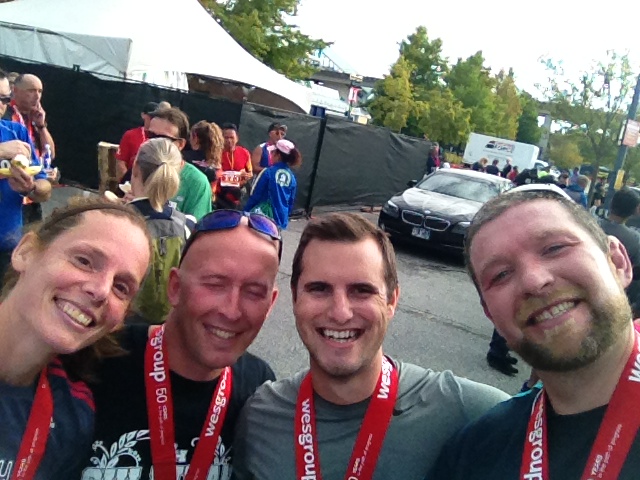
As summer approached I knew that BBQs, beaches, and two months without PE class was going to ruin the small start I had made so I decided to set a challenge for myself. I registered for my first ever half marathon (the 1st ever Surrey marathon too) and set about planning a running schedule to save myself from myself. All that summer I ran. I ran on holidays, I ran in the heat, I ran at night, I just ran... like Forrest Gump... and I hated every second of it. In September when the race day arrived, my training went out the window and I started too quickly. 2/3rds of the way through I hit a wall and spent the last 6km swearing at myself under my breath, watching all three of my friends pass me, and promising I would never do a half marathon again.
Being a part of the Sulli crew though, I continued to participate in school fitness, getting my calorie burn going in many different ways. I enjoyed the AB partner, trifecta (crossfit) and Insanity days much more than track or community running, but the last year has forced me to rethink my disdain for the pounding the pavement.
As a father of two small children, my time is precious and filled with pick ups, drop offs, swimming, ballet, and a busy bedtime routine. Gone are the days where I could "hit the gym" in the late afternoon or early evening. Plus, without the need to be bigger, for the abuse of a full contact sport, I no longer need to lift weights and gain mass. So with my school routine helping but not enough... I began the search for a new "healthy" me.
What I found part way through last school year was that I had time to exercise after 9-9:30pm, when the kids are in bed. Most classes at a YMCA were done by then, my need/desire to pump iron was gone, so I was left looking for free ways to keep my family history of heart disease at bay. What kept staring me in the face were my running shoes at the bottom of the stairs. So... with an angry face... I would lace up, turn on the Nike running app, crank the tunes and try to finish my run as fast as I could.
As summer approached I knew that BBQs, beaches, and two months without PE class was going to ruin the small start I had made so I decided to set a challenge for myself. I registered for my first ever half marathon (the 1st ever Surrey marathon too) and set about planning a running schedule to save myself from myself. All that summer I ran. I ran on holidays, I ran in the heat, I ran at night, I just ran... like Forrest Gump... and I hated every second of it. In September when the race day arrived, my training went out the window and I started too quickly. 2/3rds of the way through I hit a wall and spent the last 6km swearing at myself under my breath, watching all three of my friends pass me, and promising I would never do a half marathon again.
One of the things I dislike about running is how solo an activity it is. That makes it great because you can do it whenever you have time (you don't need to coordinate team members) but as a huge talker and social person, I also find it extremely boring.
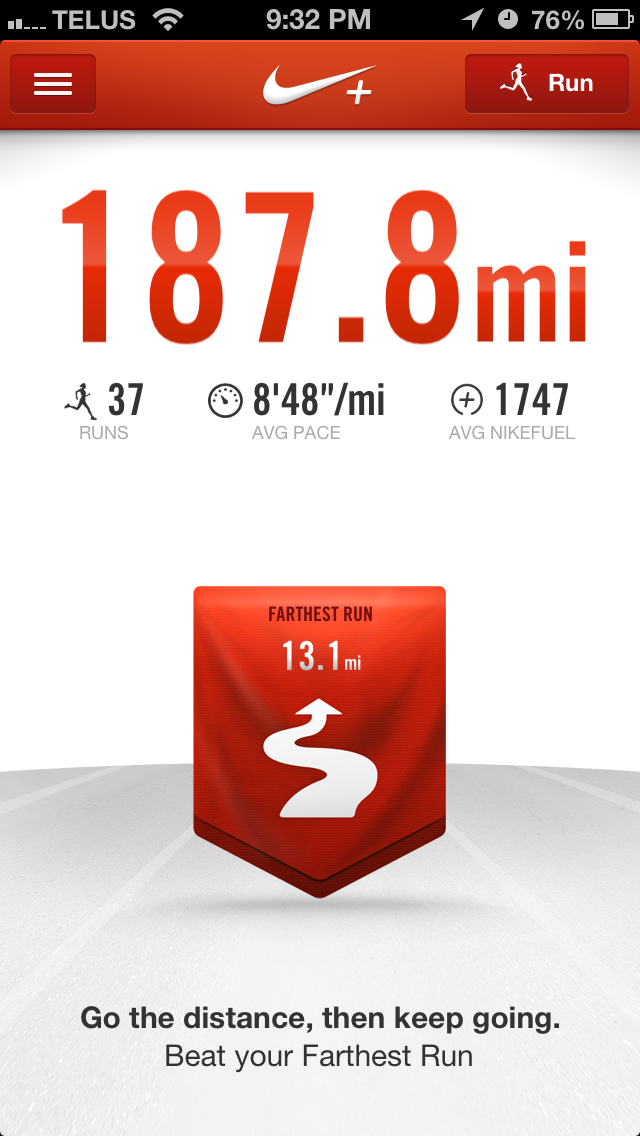
As the school year progressed, I was able to use my four PE classes a day (including a senior PE in Blk 5 with the Superfit class) to keep myself fairly active. Normally this would have been more than enough for me, but though the marathon was passed, I found myself in the habit of heading out in the late evenings for a 5-10km run. I still didn't like it, but I kept doing it. As habits are hard to break, the miles kept clicking over, and I began to notice the changes in other aspects of my health. Since last June I have logged 188 miles over 37 runs, outside of the Tuesday/Friday fitness sessions I get at school.
I improved my diet by eating a more complete breakfast than in the past. The late night training had me looking for some eggs and fruit in the morning to go with my usual coffee. My lunches became less snack mix and more veggies. I had never had a high sugar/junk food diet but I was definitely inconsistent and incomplete in my daily calorie intake. I have regulated some of longer breaks without food I used to take, and I have been getting a little more nutrient dense food into the regular mix as well. The other major dietary change that has been necessary is to increase the amount of plain water I drink. I have never been a huge "hydrator" but this year has seen more glasses of water go down my throat than most. In the evenings the juice or chocolate milk has been replaced by extra waters, and I usually get 2 or 3 large mugs into me on fitness days. I still love my coffees but there is a better balance these days.
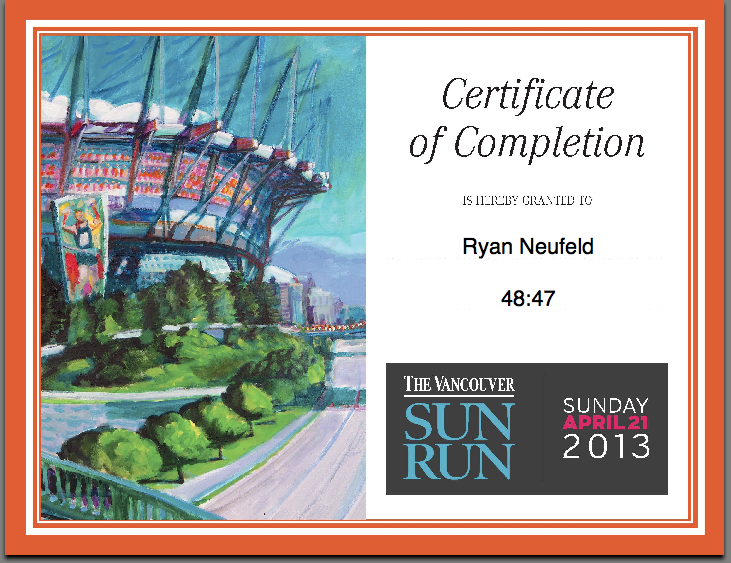
There has been a slow steady improvement in my fitness scores over the last year, but as I no longer need to compete for a spot, the bump from 11-12 to 13 on the beep test is only a small reminder of improved cardio vascular health. I still enjoy the friendly competition of peers and personal scores on the beep as a way to stretch the extra five or six cones out of myself. There has also been a slight drop in my times on distance runs, including this years Sun Run, where on only a few hours sleep I was able to squeeze out 10km in 48 minutes and change. Not amazing or a personal best, but considering the scenario of crowds and poor preparation, it again reflected an improved base level of fitness.
While all of the running has had some obviously positive impacts on my fitness, I am also aware that it comes with a whole set of negatives as well. For one, running improves cardio vascular health and aerobic fitness... but that's it. Running improves ones ability to run, and can be very hard on knees and ankles. It does nothing for strength, core stability, balance, explosive power, agility, anaerobic fitness, or spacial awareness... in fact it can actually impact these ways of being Physically Educated negatively in many cases. All of these things are crucial to an athletes success, but everything is a trade off, so I work to address my holistic fitness during my PE class fitness sessions. That said, I am also no longer an athlete, and my needs have changed. No longer is my success dependent on sprint speed or strength in contact. As I grow older I have an increasing need for less intense activity and a greater focus on moderate aerobic fitness for my heart.
This is where we get to the next chapter in my "New Neuf" fitness book. Despite my natural inclination to do the things I have always done to be healthy, despite my previous successes with various forms of physical training and athletic competition, and despite my short attention span and extremely stubborn personality... I have decided I need to not only continue to run, but to learn to run more slowly. That's right, more slowly. I need to balance the high intensity running and full body fitness with a focus on extended but moderate running. This will allow me to continue to maximize the benefits of training for my heart attack prone ticker AND reduce the risk/severity of joint and muscle overuse injury. It will also mark a major mental shift for me. No longer will I be able to run at my maximum to get fitness over with. I will need to pay much more attention to pacing, and learn to quiet my mind from the competition and pressure to push. I will need to find the elusive calm that many runners experience, but which has always eluded me.
Like the half marathon at the start of the year, I have decided to pressure myself into my desired behaviour... by signing up for a full marathon (something I swore I would never do... even 3 months ago). Knowing I have 43kms to run in the fall, and that I CANNOT do that many miles at my current training pace/intensity, I will be constantly reminded to slow down and extend my runs, out of self preservation. The stubborn part of me needs this kick in face I think. I still don't enjoy running... but there is something in humans that finds satisfaction in doing difficult things, so I will continue to lace up the runners, turn on the Nike app, pump the tunes, and reluctantly put in the miles... a little more slowly than before.
Subscribe to:
Posts (Atom)